Publications
Reppin’ your constituency? Urban-rural differences in geographical representation in Swedish parliamentary debates
Political Geography
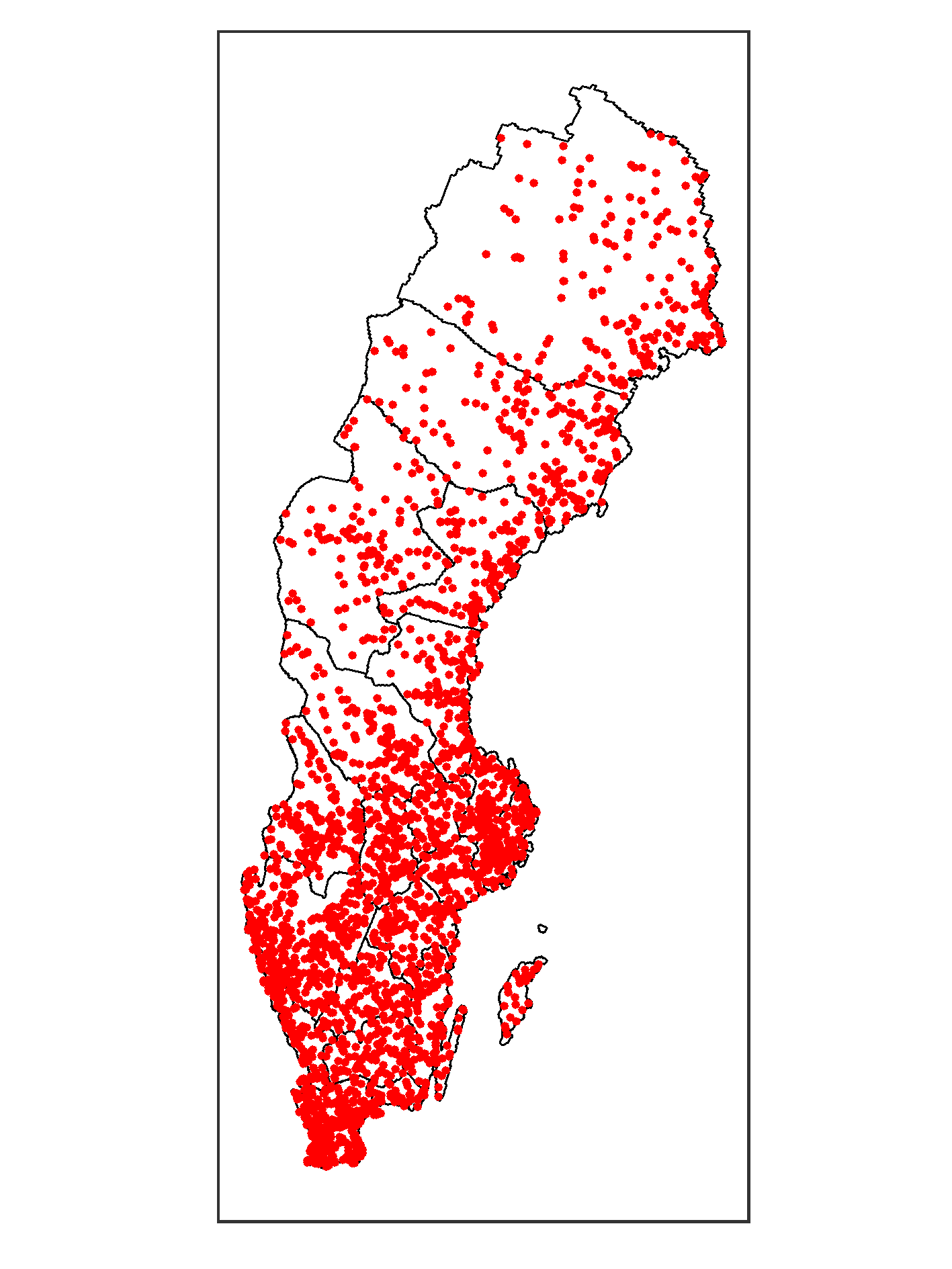
Which places do politicians appeal to, and how do they do so? While recent research has highlighted a clear urban-rural divide in political attitudes, and a voter demand for place-based representation, we know little of how politicians meet such demands. On the one hand, rural voters have been shown to be more susceptible to place-based appeals, on the other hand, recent trends in urbanization provide greater electoral incentive to appeal to urban areas. In this paper I argue that parliamentarians in general, talk more about urban places, and are more responsive to urban happenings - but that representative from rural constituency counterbalance this by being more attentive to their constituency needs. To test these claims, I use a new approach for identifying geographical mentions in parliamentary speeches that combines Named Entity Recognition and Geocoding. By analyzing fifty years of parliamentary speech in Sweden, I show that parliamentarians, especially those in rural constituencies talk more about places in their constituency. Furthermore, I find that parliamentarians are more likely to talk about their constituency in terms of economy when the local unemployment goes up. Moreover, I show that parliamentarians who have rural backgrounds are especially responsive and attentive to rural places. Overall this study improves our understanding of urban-rural representation, supply-side differences in geographical representation and how local conditions affect the content of geographical appeals.
Forthcoming, The Journal of Politics
With Hanna Bäck and Andrej Kokkonen
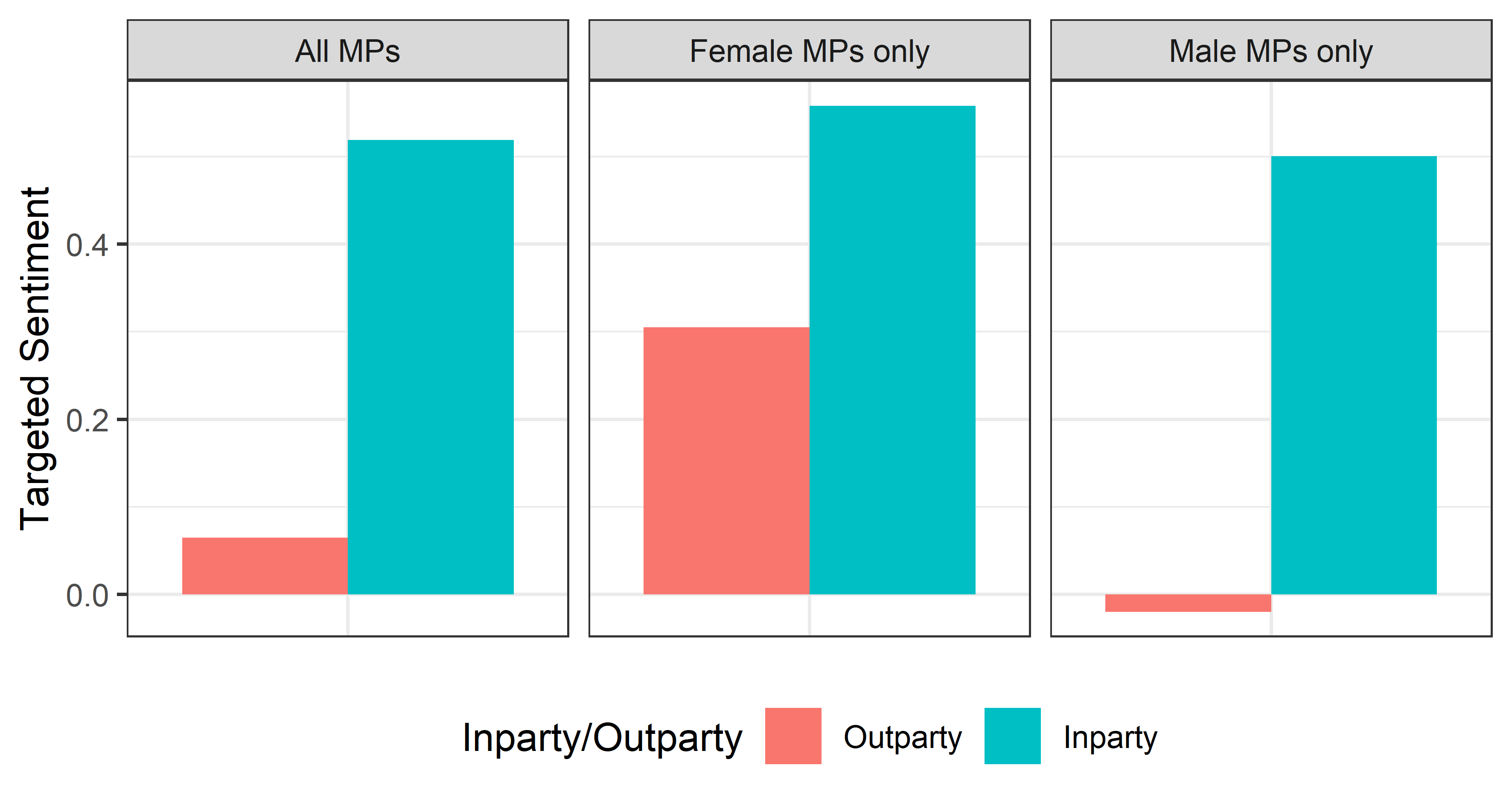
Affective polarization is increasing in many parts of the world, and previous research has shown that elite communication may have important consequences for intergroup conflict at the mass level. It has been suggested that women and men politicians engaging in different communication styles may influence affective polarization in the electorate. However, there is a lack of research analyzing gendered patterns of polarizing communication among political elites on social media. We focus on filling this gap, analyzing how politicians communicate on social media in 24 western countries. Specifically, we use machine learning to measure the tone of over 200,000 twitter interactions and find that male politicians are more likely to attack political opponents representing 'outgroups' and that male representatives receive more outgroup negativity. We propose that a 'male hostility spiral' explains this pattern, where (male) politicians attack each other online for retribution, creating a negative spiral in which hostility sparks hostility.
Digital Parliamentary Data in Action (DiPaDA 2024) – Introduction. DHNB (2024), vol.7, no. 1, pp. 1-6. With Daniel Brodén, Mats Fridlund and Matti La Mela.
